
It’s the plutonomy, stupid!
The economy's composition changed over 20 years ago, but economic reporting hasn't caught up.
“It’s the economy, stupid” is both a slogan from a long gone era and a truism used to invoke the supposed center of American political gravity. Pundits are obsessed with commonsense economic storytelling that couples American social reality to markets. They read quarterly job numbers like a presidential scorecard and report on the details of the latest stock market frenzy like a horse race.
Neither the economy nor American lived reality are that simple, but American media nevertheless prides itself on its ability to report on both the economy and vibes accurately. However, as consumer and worker dissatisfaction has grown in the past year, some pundits have begun asking why Americans are so unhappy given the “strength” of the economy.
To some of you this question might seem silly, but it’s recurrence in the media creates a genuine opportunity to understand basic economic reporting and how changes in the economy over the last four decades complicate the data. The title of the post, is a huge spoiler, but we’ll talk about the idea of a plutonomy later in the post. For now, let’s put ourselves in the headspace of the average pundit by looking at aggregate economic data.
What was the state of the 2025 economy?
2025 was weird, but you probably don’t need a reminder. Given everything that happened, pundits and economists anticipated market “headwinds” to weaken the economy’s performance. We saw tariffs, federal job cuts, anticipated inflation, a slowing labor market, the unlawful rounding up of citizens and immigrants, higher interest rates, and a government shutdown. Forecasters expected each of these to show up in the data to some extent; however, high-level indicators suggests that the economy was extremely resilient.
GDP growth was stronger than anticipated
Quarterly GDP growth (annualized rate), 2021–2025
GDP is one of those metrics that everyone’s heard of but may not fully understand. You can think of GDP as the throughput of the economy. The most commonly used version of GDP, the expenditures approach, totals all the goods and services purchased in the economy. GDP is often measured as a dollar value and is broken into subcomponents (Consumption + Investment + Government Spending + Net Exports). GDP growth is typically reported as an annualized rate, meaning if the economy grew 1 percent in one quarter, it's reported as 4 percent to show what would happen if that pace continued for a full year. I've chosen to focus on percentage growth rates as this is the way the media typically discusses economic performance.
Why calculate a measure like this? Well, imagine if you wanted to troubleshoot your internet or a faucet. The first thing you’d probably want to know is if anything is even flowing through the pipes. Measuring GDP growth is like that for economists. Granted, every method of calculating GDP (including the expenditures approach) has blind spots, but let’s save that concern for a future post since we’re trying to view the economy like a pundit.
The US saw strong GDP growth in 2025, in spite of Trump’s authoritarian and nationalist policies. As of time of writing, we only have official numbers up to Q3 2025 because of delays caused by this administration. Q3 shows annualized growth of 4.3 percent and projections for Q4 vary widely with conservative estimates putting growth somewhere above 3 percent. Long story short, as far as GDP is concerned, the faucet is flowing with sufficient pressure.
If you want a detailed breakdown of GDP subcomponents for each quarter, the US Bureau of Economic Analysis (BEA) has archived releases here, or you can build your own interactive graph here.
Note: The 43-day government shutdown in fall 2025 delayed economic data releases and affected data collection, which is why some numbers remain preliminary. We should have Q4 numbers by February 20, 2026.
Unemployment looks relatively fine
Unemployment rate (2021–2025)
Like with GDP, unemployment is about as good as can be expected. The average unemployment rate for 2025 was 4.2 percent, slightly higher than 2024’s average of about 4 percent.
For historical and conceptual reasons, economists believe that advanced economies like the US tend to operate around a “natural” rate of unemployment, often called the non-accelerating inflation rate of unemployment (NAIRU), or u* (“u-star”). In the US, this rate has typically been estimated to fall somewhere between 4 and 5 percent, so whenever current unemployment numbers are within this range it’s considered consistent with a healthy labor market. The idea is not that unemployment is beneficial, but that in a dynamic market some job turnover and search frictions are unavoidable, and that the resulting slack allows workers and firms to reallocate as market conditions change.
Importantly, NAIRU is not a directly observed fact of the economy. It’s a latent parameter inferred from economic models using historical data, and its estimated value shifts over time as institutions, bargaining power, productivity, and inflation dynamics change. As a result, NAIRU has increasingly functioned as a rule of thumb rather than a stable empirical relationship. Policymakers and central banks rely on real-time estimates of u*, but confidence in those estimates is usually retrospective, once inflation outcomes are known.
Economists also track six different measures of labor underutilization. The most commonly reported is U-3, the official unemployment rate, which counts people without a job who are actively seeking work as a share of the labor force. Measures U-1 and U-2 capture narrower subsets of this group, while U-4 through U-6 expand the definition to include discouraged workers and various forms of underemployment, offering a broader picture of slack in the labor market.
Zooming into 2025’s monthly unemployment numbers, one worrying trend is that unemployment has been rising since June 2025. This is an indication that the labor market could be slowing down.
Note: October 2025’s numbers are missing due to the October 2025 government shut down.
Inflation remains elevated but is falling
CPI inflation (YoY % change), 2021–2025
Inflation has become a kind of shorthand for rising prices since COVID. Technically, though, inflation is not about prices being high; it’s about the rate at which prices are rising. This may sound pedantic, but inflation measures the average pace of price changes across the economy, not every individual price increase. Like a speedometer, it tells you how fast things are moving, not how far you’ve already gone. Slower inflation means prices are rising less quickly, not that they’re reversing. Prices can be higher than before inflation began and inflation can simultaneously be decreasing, which is what we're currently experiencing. CPI Inflation peaked in 2022, even though the actual price of goods and services haven’t seem to have come down much.
As with GDP and unemployment, there are multiple ways to measure inflation. Most rely on tracking changes in the prices of a representative basket of goods and services over time, with updates reported monthly. Different measures vary in what they include and how they weight spending, but they are all trying to capture broad price trends. The Consumer Price Index (CPI) is the headline measure most commonly reported; others include Personal Consumption Expenditures (PCE), core versions of CPI and PCE that exclude volatile components, and the Producer Price Index (PPI), which tracks price changes faced by producers. Within each measure, prices can also be broken down by consumption category.
By the end of 2025, inflation was running in the high-2 percent range based on the Consumer Price Index (CPI), lower than earlier in the year when it was closer to 3 percent. While the US Federal Reserve has a mandate of keeping inflation to 2 percent, the fact that inflation fell in the same year penguins were being tariffed surprised forecasters. By recent historical standards, inflation in 2025 looked relatively contained.
Note: October 2025’s numbers are missing due to the October 2025 government shut down.
…And the stock market keeps on a-chugging
The stock market is not a core macroeconomic indicator that economists use to assess everyday economic conditions, even though American media talks about it constantly. You’ve likely already heard, repeatedly, that stocks surged in 2025, driven largely by a small group of mega-cap technology firms referred to as the “Magnificent Seven.” That performance mainly reflects investor expectations and the concentration of capital, not how the economy is functioning for most people.
Other asset markets, like gold, are also seeing record high booms due to political chaos (read: US nationalism and fascism) and the fact that asset holders are looking for more places to retain value besides stocks and bonds.
But arguably only two statistics matter…
I’ve painted a broad picture of the economy as pundits see it. However, narrower indicators like job mobility, the rate of hirings, the growth of consumer credit and gigwork, as well as GDP across states slightly complicate this picture. These data suggest that while aggregate performance has been strong, economic outcomes have diverged significantly across income and wealth groups.
The media is broadly aware of these patterns, but they are rarely integrated into analysis outside of a catch-all term called the “K-shaped economy.” This is a metaphor reflecting that economic trajectories have split—like the arms of the letter K—with higher-income and higher-net worth households experiencing continued gains, while lower-income households face stagnation, rising costs, and increased precarity.
While analysts have pointed to varying data to justify the idea of a K-shaped economy, for me two statistics dominate:
1. The top 10 percent of American income earners made up nearly half of all consumer spending[1]1 (49%) in Q2 2025.[2]2
2. The top 10 percent of wealthiest Americans own 93% of stocks as of 2024.
What this means is that high-income and high-wealth individuals are effectively “crowding out” the lower 90%, capturing much of the economy’s gains and driving the bulk of activity in markets. As everyday brands begin to cater to wealthier clientele and as the bottom 90% see returns from participating in the economy shrink, large swaths of the population seem to increasingly feel alienated.
While inequality is nothing new, what’s interesting is that this exact pattern of inequality was described in detail by Citibank analysts back in 2005. These analysts not only put a name to the pattern, but they also explain why traditional ways of measuring the economy completely fail to understand it. To this day, economic reporting makes the exact mistakes highlighted within Citibank’s analysis.
Welcome to the plutonomy
In October 2005, Citibank began issuing investment advice to ultra-high net worth clients via a series of memos colloquially referred to as the Plutonomy Memos or Plutonomy Reports. As far as I know, there are three in total with the central thesis being that anglophone economies, especially the US and UK, are better conceived of as plutonomies (plutocracy + economy). The authors make their case with the most Team Rocket[3]3 energy I’ve ever seen in professional writing. I can’t understate how both cringe and cavalier parts of the report come across given the subject manner.
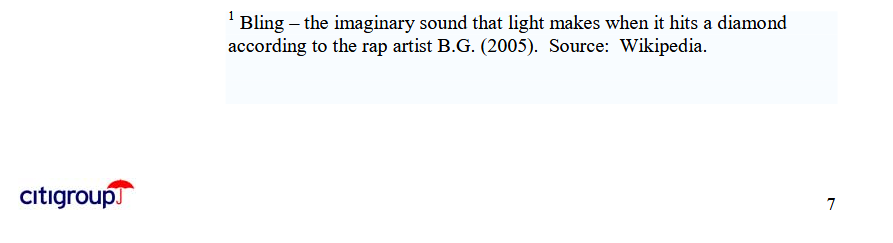
In a plutonomy, according to the authors, there is no “average consumer.” Instead, they highlight that there are: “rich consumers, few in number but disproportionate in the gigantic slice of income and consumption they take.” It would take mainstream media nearly 20 years to identify this trend as the k-shaped economy. While economists and pundits are just catching up, the wealthy have apparently been prepped on this well before the Great Recession.
While I think the Plutonomy Reports are a big deal, I want to be careful to not overstate their significance. On some corners of the internet, these memos have been hyped as controversial and clandestine documents giving us a look into how the ultra-rich actually see the rest of us. I don’t think that’s accurate, but this perception hasn’t been helped by the fact that Citibank aggressively tried to purge these memos from the internet in the early 2010s.
In actuality, the Plutonomy Reports are fairly mundane. They should be seen less like a financial version of Project 2025 and more like finance bros schmoozing clients over drinks. That’s essentially what this is, as nothing here is agenda setting. There are no proprietary or sophisticated models here either, the memos simply discuss publicly known trends and point to the economic reality of the 2000s as a favorable investment environment for the wealthy. In that regard, the real value of these memos isn’t in showing us what the wealthy are planning or what they think about us. Instead in these documents, Citibank’s analysts directly anticipate the confusion seen in today’s economic headlines. This is partly because pundits and forecasters expressed the exact same confusion 20 years ago.
Still, it is shocking how little attention these memos have received, especially in light of 2008. A cursory historical Google search I conducted last week shows that maybe a handful of major outlets covered the memos between 2008 and 2011. In print I saw articles from outlets like The Atlantic and Slate, dated back to 2011. Bill Moyers covered this on his show, The Journal, back in 2010. In 2012 Edward Fullbrook, an academic researcher, wrote his own report elaborating on the mechanisms that the Plutonomy Reports describe. Knowledge about the Plutonomy Reports seems to have been kept alive via message boards, YouTube channels, and blogs like mine. I’ll pay it forward by sharing all three reports in the resource section of this post. But for those of you who don’t want to read the memos in their entirety, below are highlights.
Defining plutonomy
The world is dividing into two blocs - the plutonomies, where economic growth is powered by and largely consumed by the wealthy few, and the rest. Plutonomies have occurred before in sixteenth century Spain, in seventeenth century Holland, the Gilded Age and the Roaring Twenties in the U.S.
— Memo 1 Plutonomy: Buying Luxury, Explaining Global Imbalances
What are the common drivers of Plutonomy? Disruptive technology-driven productivity gains, creative financial innovation, capitalist-friendly cooperative governments, an international dimension of immigrants and overseas conquests invigorating wealth creation, the rule of law, and patenting inventions. Often these wealth waves involve great complexity, exploited best by the rich and educated of the time.
— Memo 1 Plutonomy: Buying Luxury, Explaining Global Imbalances
It gets better (or worse, depending on your political stripe) - the top 1% of households account for 40% of financial net worth, more than the bottom 95% of households put together.
— Memo 1 Plutonomy: Buying Luxury, Explaining Global Imbalances
Outlandish it may sound, but examined through the prism of plutonomy, some of the great mysteries of the economic world seem to look less mystifying. As we showed, there is a clear relationship between income inequality and low savings rates: the rich are happy to run low or negative savings given their growing pool of wealth. In turn, those countries with low/negative household savings rates tend to be the countries associated with current account deficits.
— Memo 1 Plutonomy: Buying Luxury, Explaining Global Imbalances
...we hear so often about “the consumer”. But when we examine the data, there is no such thing as “the consumer” in the U.S. or UK, or other plutonomy countries. There are rich consumers, and there are the rest. The rich are getting richer, we have contended, and they dominate consumption.
— Memo 1 Plutonomy: Buying Luxury, Explaining Global Imbalances
The overall point here is that the rich continue to be in great shape, in relative terms. Indeed, their net wealth to income ratio (Figure 3) has risen since the 2001 survey was published. It now stands at 8.4, in other words, net wealth is over eight times annual income. In 1995 this ratio was a relatively meager 6.2. We think this rising wealth is the real reason why the rich are happy to keep consuming, and are behaving rationally in so doing.
— Memo 2 Revisiting Plutonomy: The Rich Getting Richer
Causes of plutonomy
Was the U.S. always a plutonomy - powered by the wealthy, who aggrandized larger chunks of the economy to themselves? Not really. For those interested in the details, we recommend “Wealth and Democracy: A Political History of the American Rich” by Kevin Phillips, Broadway Books, 2002.
— Memo 1 Plutonomy: Buying Luxury, Explaining Global Imbalances
With the exception of the boom in the Roaring 1920s, this super-rich group kept losing out its share of incomes in WWI, the Great Depression and WWII, and till the early eighties. Why? The answers are unclear, but the massive loss of capital income (dividend, rents, interest income, but not capital gains) from progressive corporate and estate taxation is a possible candidate. The rise in their share since the mid-eighties might be related to the reduction in corporate and income taxes.
— Memo 1 Plutonomy: Buying Luxury, Explaining Global Imbalances
David Gordon and Ian Dew-Becker of the NBER demonstrate that the top 10%, particularly the top 1% of the US – the plutonomists in our parlance – have benefited disproportionately from the recent productivity surge in the US. ( See “Where did the Productivity Growth Go? Inflation Dynamics and the Distribution of Income”, NBER Working Paper 11842, December 2005). By contrast, in other countries such as Japan, France and the Netherlands (read much of continental Europe), egalitarianism has kept the rich to a similar share of income and wealth that they accounted for in the 1980s – in other words, they haven’t really gotten any richer, in relative terms.
— Memo 2 Revisiting Plutonomy: The Rich Getting Richer
The rise of the plutonomy has been an incredibly important development of the last 25 years. We think the huge increases in wealth and income inequality that has occurred as the rich have become richer helps explain many conundrums that simplistic analysis of “the average consumer” ignores.
— Memo 3 Rising Tides Lifting Yachts
Undoing plutonomy
At the heart of plutonomy, is income inequality. Societies that are willing to tolerate/endorse income inequality, are willing to tolerate/endorse plutonomy... Organized societies have two ways of expropriating wealth - through the revocation of property rights or through the tax.
— Memo 1 Plutonomy: Buying Luxury, Explaining Global Imbalances
The rise of this inequality is not universal. In a number of other countries – the non-plutonomies – income inequality has remained around the levels of the mid 1970s. Egalitarianism rules.
— Memo 3 Rising Tides Lifting Yachts
...if anything, the trends of taxation are positive for corporates, with fiscal competition in Europe forcing rates lower, year by year. Ironically, this is happening most in non-plutonomy countries, like Germany. This is good for the profit share, of which the mega-rich, through their holdings of equity, are “long”. However, even if the profit share is rising, the fruits of those profits could be taxed before ending up in the pockets of the rich. In other words, dividend, capital gains and estate taxes could all rise. However, we struggle to find examples of this happening. Indeed, in the U.S., the current administration’s attempts to change the estate tax code and make permanent dividend tax cuts, plays directly into the hands of the plutonomy. While such Pluto-friendly policies are not widely being copied around the world, we have not found examples of the opposite occurring elsewhere.
— Memo 1 Plutonomy: Buying Luxury, Explaining Global Imbalances
Our whole plutonomy thesis is based on the idea that the rich will keep getting richer. This thesis is not without its risks. For example, a policy error leading to asset deflation, would likely damage plutonomy. Furthermore, the rising wealth gap between the rich and poor will probably at some point lead to a political backlash. Whilst the rich are getting a greater share of the wealth, and the poor a lesser share, political enfrachisement remains as was – one person, one vote (in the plutonomies). At some point it is likely that labor will fight back against the rising profit share of the rich and there will be a political backlash against the rising wealth of the rich. This could be felt through higher taxation (on the rich or indirectly though higher corporate taxes/regulation) or through trying to protect indigenous laborers, in a push-back on globalization – either anti-immigration, or protectionism.
— Memo 2 Revisiting Plutonomy: The Rich Getting Richer
Making sense of the plutonomy
Sitting on this side of 2026, what makes the Plutonomy Reports fascinating is that while they’re not flawlessly accurate in their predictions, they do get the general shape of the economy right. They predict why forecasters focusing on aggregates and traditional measures might miss genuine economic distress in non-recessionary times.
Interestingly, the lead analyst of these memos in 2019 suggested that the end to the plutonomy was nearing. What he saw before COVID that made him say this, I don’t know, but it’s clear we’re still living in a plutonomy. And just as he and his team pointed out over 20 years ago, focusing on the composition of the economy reveals who is driving and benefiting from the lion’s share of economic activity.
Crucially, though, I don’t think this is the only major shift in our economy that’s driving frustration. There are arguably three pillars of discontent in anglophone economies that are feeding into one another. Aside from plutonomy, asymmetric economic relations and loss of meaning are two other important ones. In a follow-up post I’ll go into detail about this, so make sure you subscribe to be notified.
Recommended reading
Book: “Wealth and Democracy: A Political History of the American Rich” by Kevin Phillips
Affiliate disclaimer
Books on this page and throughout the site are linked to my Bookshop.org affiliate pages, where your purchase will earn me a commission that will help cover site costs. If you find the books I recommend at all interesting, consider purchasing through Bookshop, which shares profits with local bookstores. You can learn more about how you can support Misaligned Markets here.
If you liked this blog post support my tea habit by tipping me!
- Caveats: We don't know the methodology of the Moody's report that behind this headline. Second, economists say that this statistic as reported violates accounting identities for income. The rich would have to have negative savings to consume at these rates. It's worth noting, however, that a Dallas Fed report with a different methodology still found a moderate degree of consumption concentration in the economy.
- My response to critiques of this Moody's stat is that regardless of the actual number, other data including company-level data show that the rich are dominating consumption and that even value brands are tailoring to wealthier clientele. Second, Plutonomies by their nature are driven by high-income and wealthy consumers supplimenting savings with assets. They can sustain negative savings rates as long as their assets keep growing.
- The anime trio; not Giovanni.